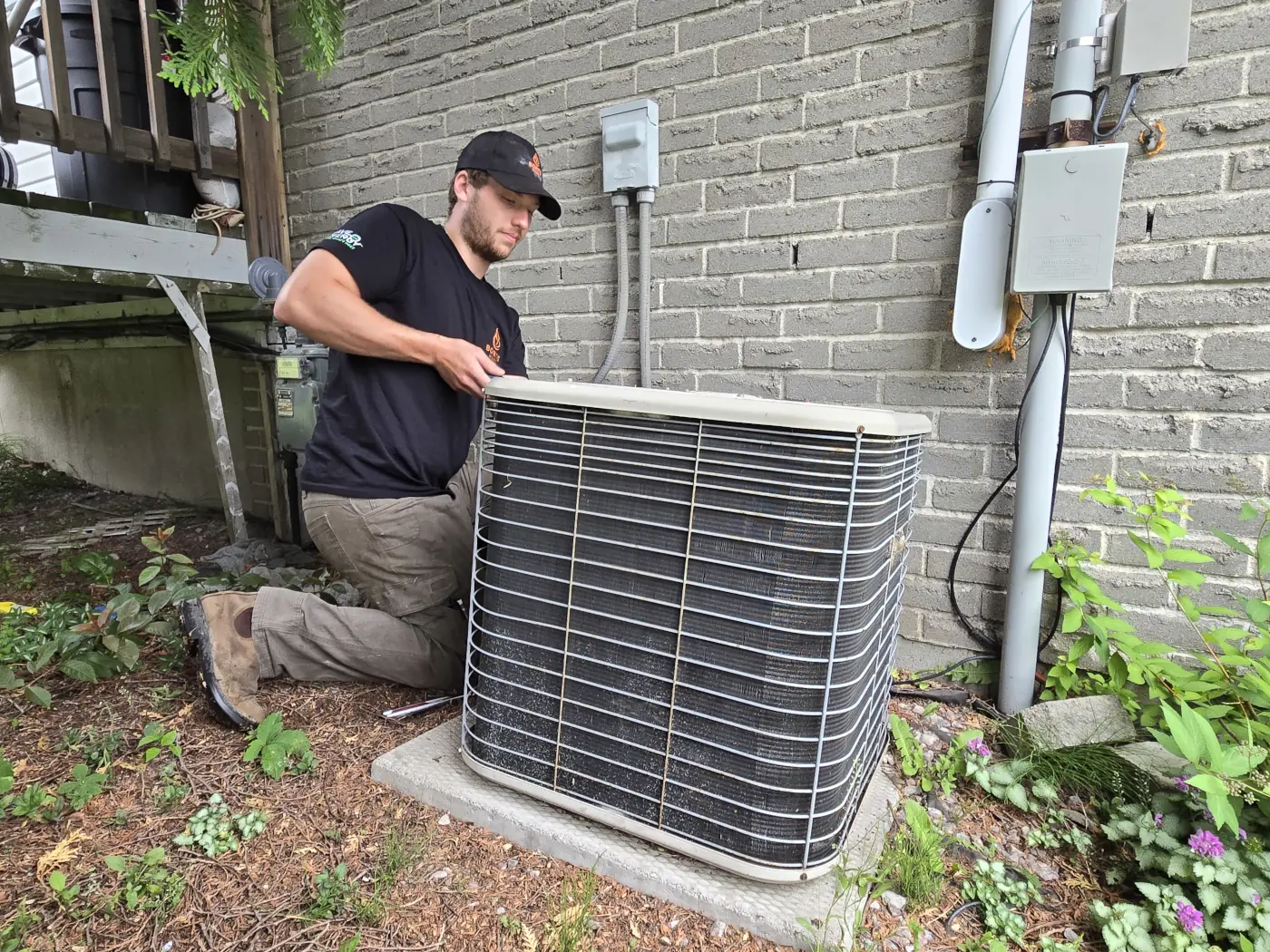


How to Choose the Right HVAC System for New Construction
Selecting the right HVAC system for new construction is one of the most important decisions you’ll make for your new home or building. A good HVAC system for new construction keeps you comfortable year-round while saving money on energy bills. The best system depends on your climate, building size, budget, and energy efficiency goals. Today’s options include traditional furnaces and air conditioners, heat pumps, ductless mini-splits, and geothermal systems. Each has different costs, benefits, and efficiency ratings. Making the right choice now prevents expensive changes later and ensures comfort for years to come.
Table of Contents
| HVAC System Type | Initial Cost | Energy Efficiency | Best For |
|---|---|---|---|
| Split System | $$$ | Good | Traditional homes with existing ductwork |
| Heat Pump | $$$ | Very Good | Moderate climates, energy-conscious homeowners |
| Ductless Mini-Split | $$$ | Excellent | Homes without ducts, additions, zone heating/cooling |
| Geothermal | $$$$$ | Outstanding | Long-term homeowners, maximum efficiency |
| Packaged System | $$ | Good | Limited indoor space, small homes |
Understanding Your HVAC Needs for New Construction
Before picking an HVAC system for new construction, you need to understand what your building needs. This helps you avoid getting a system that’s too big or too small.
Consider Your Climate
Your local weather affects which HVAC system for new construction works best. In hot places like Florida or Arizona, you need strong cooling. In cold areas like Minnesota, heating power matters more.
Some systems work better in certain climates. Heat pumps are great for mild climates but may need backup heating in very cold areas. Your local HVAC pro can tell you which systems work best where you live.
Calculate the Right Size
Getting the right size HVAC system for new construction is super important. A system that’s too small won’t keep you comfortable. One that’s too big will waste energy and money.
HVAC pros use a “Manual J calculation” to find the right size. This looks at:
- Square footage of your home
- Ceiling height
- Window size and placement
- Insulation quality
- Number of people living there
Never guess on size or just use square footage alone. A proper calculation ensures your system runs efficiently for years.
Plan for Future Needs
Think about how long you’ll be in the building. If you’re building your forever home, investing in a high-efficiency HVAC system for new construction makes sense. The higher upfront cost pays off over time.
Also consider if you might add on to your home later. Some systems are easier to expand than others. Modular systems or those with zoning capabilities can grow with your needs.
Types of HVAC Systems for New Construction
There are several HVAC system options for new buildings. Each has pros and cons for different situations.
Traditional Split Systems
Split systems are the most common HVAC system for new construction. They have an outdoor unit (with the compressor and condenser) and an indoor unit (with the evaporator coil and blower).
Pros:
- Lower upfront cost than some alternatives
- Familiar to most HVAC contractors
- Good efficiency options available
Cons:
- Requires ductwork throughout the home
- Less energy efficient than newer technologies
- Takes up more space than some alternatives
Split systems work well in most homes and are a reliable choice for new construction.
Heat Pumps
Heat pumps are becoming more popular for HVAC systems in new construction. They work by moving heat rather than creating it, which saves energy.
Pros:
- Very energy efficient
- One system for both heating and cooling
- Lower operating costs than traditional systems
Cons:
- May need backup heating in very cold climates
- Higher upfront cost than traditional split systems
- Requires professional installation
Heat pumps are an excellent choice for energy-conscious homeowners in mild to moderate climates.
Ductless Mini-Split Systems
Ductless mini-splits are a flexible HVAC system for new construction. They have an outdoor unit connected to one or more indoor air handlers.
Pros:
- No ductwork needed
- Zone control for different rooms
- Very energy efficient
Cons:
- Higher upfront cost than traditional systems
- Indoor units are visible on walls
- May not be ideal for very large homes
Mini-splits are perfect for smaller homes or when you want different temperatures in different rooms.
Geothermal Heat Pumps
Geothermal systems use the stable temperature of the ground to heat and cool your home. They’re the most efficient HVAC system for new construction.
Pros:
- Extremely energy efficient
- Very long lifespan (20+ years)
- Low operating costs
Cons:
- Highest upfront cost
- Requires enough land for ground loops
- Complex installation
Geothermal is best for those planning to stay in their home long-term and who prioritize efficiency.
Energy Efficiency Considerations
Energy efficiency is a key factor when choosing an HVAC system for new construction. More efficient systems cost less to run and are better for the environment.
Understanding Efficiency Ratings
HVAC systems have different efficiency ratings that help you compare options:
- SEER (Seasonal Energy Efficiency Ratio) – For cooling efficiency. Higher is better. New systems must be at least 14 SEER in most areas.
- HSPF (Heating Seasonal Performance Factor) – For heat pump heating efficiency. Look for 8.2 or higher.
- AFUE (Annual Fuel Utilization Efficiency) – For furnaces. Modern systems range from 80% to 98% efficient.
Higher efficiency systems cost more upfront but save money over time. For new construction, it’s often worth investing in higher efficiency since you’ll benefit for many years.
Energy-Saving Features
Modern HVAC systems for new construction offer features that boost efficiency:
- Variable-speed motors adjust output based on needs instead of running at full blast
- Smart thermostats learn your schedule and adjust temperatures automatically
- Zoning systems heat or cool only the areas you’re using
- Two-stage or modulating operation provides just the right amount of heating or cooling
These features may increase the initial cost of your HVAC system for new construction, but they improve comfort and reduce energy use.
Budget Considerations
Cost is always important when choosing an HVAC system for new construction. You need to think about both upfront and long-term costs.
Initial Investment vs. Long-Term Savings
More efficient HVAC systems for new construction cost more upfront but save money over time. For example:
- A basic 14 SEER air conditioner might cost $3,000-$5,000
- A high-efficiency 20 SEER model might cost $5,000-$8,000
But the high-efficiency model could save $300-$500 per year on energy bills. After 5-7 years, it starts paying for itself.
When building new, it’s often smart to invest in better efficiency since the cost difference is smaller during construction than when replacing later.
Available Rebates and Incentives
Many utility companies and governments offer rebates for efficient HVAC systems for new construction. These can include:
- Federal tax credits (up to 30% for some systems)
- Utility company rebates
- State and local incentives
Ask your HVAC contractor about available incentives. These can significantly reduce your costs.
Installation Considerations
Proper installation is crucial for any HVAC system for new construction. Even the best system won’t work well if installed poorly.
Working With Your Builder and HVAC Contractor
Communication between your builder and HVAC contractor is essential. They need to coordinate on:
- Ductwork layout and sizing
- Equipment placement
- Electrical and gas line requirements
- Drainage for condensate
Ideally, your HVAC contractor should be involved early in the building process. This ensures the system is properly integrated into the home’s design.
Ductwork Design
If your HVAC system for new construction uses ducts, their design is extremely important. Poor ductwork can reduce efficiency by 20-30%.
Good ductwork design includes:
- Proper sizing (not too big or small)
- Short, straight runs when possible
- Sealed joints to prevent leaks
- Adequate insulation in unconditioned spaces
During new construction is the best time to get ductwork right. Fixing it later is much more difficult and expensive.
Future-Proofing Your HVAC System
When choosing an HVAC system for new construction, think about how it will serve you in the future.
Smart Home Integration
Modern HVAC systems can connect to smart home systems. This allows:
- Control from your phone
- Integration with other smart devices
- Learning your preferences automatically
- Alerts for maintenance or problems
Even if you don’t want all these features now, choosing a system that can be upgraded later is smart. Look for systems that work with common platforms like Google Home, Amazon Alexa, or Apple HomeKit.
Maintenance Requirements
All HVAC systems need regular maintenance, but some need more than others. When choosing an HVAC system for new construction, consider:
- How often filters need changing
- Annual maintenance costs
- Availability of parts and service
- Expected lifespan of the system
Systems with simpler maintenance requirements may cost less over time, even if they’re more expensive initially.
Frequently Asked Questions
What size HVAC system do I need for my new home?
The size depends on many factors including square footage, climate, insulation, and home design. A professional should perform a Manual J calculation to determine the exact size. As a rough estimate, you need about one ton of cooling capacity for every 600-1000 square feet of living space.
Are heat pumps worth it for new construction?
Yes, heat pumps are often an excellent choice for new construction. They’re very efficient, provide both heating and cooling, and work especially well in well-insulated new homes. In moderate climates, they can save 30-40% on energy costs compared to traditional systems.
How much should I budget for an HVAC system in new construction?
For a typical new home, budget 5-10% of the total construction cost for the HVAC system. For a $300,000 home, that’s $15,000-$30,000. Basic systems fall at the lower end, while high-efficiency or advanced systems cost more.
Can I mix different types of HVAC systems in my new home?
Yes, hybrid or dual-fuel systems are becoming popular. For example, you might use a heat pump for mild weather and a gas furnace for extreme cold. Or you might use a central system for the main living areas and mini-splits for additions or bonus rooms.
How long should a new HVAC system last?
With proper maintenance, expect 15-25 years from most HVAC systems for new construction. Heat pumps and air conditioners typically last 15-20 years, while furnaces can last 20-25 years. Geothermal systems can last 25+ years for the indoor components and 50+ years for the ground loops.
Making Your Final Decision
Choosing the right HVAC system for new construction involves balancing many factors. Focus on what matters most to you – whether that’s upfront cost, long-term savings, comfort, or environmental impact.
Get multiple quotes from qualified HVAC contractors. Ask lots of questions and make sure they explain why they recommend specific systems for your situation.
Remember that the best HVAC system for new construction is one that meets your specific needs. What works for your neighbor might not be right for you.
When you’re building a new home or building, the HVAC system is not the place to cut corners. The decisions you make now will affect your comfort and budget for decades to come.
Ready to find the perfect HVAC system for your new construction project? Contact Borts HVAC today to schedule a consultation with our experienced technicians. We’ll help you navigate all your options and design a system that keeps you comfortable for years to come while maximizing your energy savings.